
How to Check Criminal History in Lancaster County
Begin with the free Unified Judicial System Public Web Docket Sheets. Search both Magisterial District and Court of Common Pleas records because those systems show different stages. The official help advice is simple: use fewer fields first. A first name, last name, and Lancaster County often work better than a form filled with guesses. Open the docket PDF and compare the filing date, originating court number, charge facts, and any public identifying detail before deciding that a result belongs to the right person.
Then choose the office that holds the missing piece. Clerk of Courts supplies the Common Pleas file and certified copies. Lancaster County Prison shows current county custody. The arresting police department controls its own incident narrative. PATCH supplies the Pennsylvania State Police repository view. No single result replaces the rest.
- Search UJS at the Magisterial District level, then repeat the name in Common Pleas.
- Open the public docket sheet and match the court, date, case status, and charge rows.
- Check the county prison search when present custody or a recent commitment matters.
- Ask Clerk of Courts or the arresting agency for public documents that are not online.
- Use PATCH, or Access and Review for your own full PSP record, to compare the repository view.
For a clear official starting menu, the Lancaster County Public Records hub links the county's criminal court and current-inmate searches.
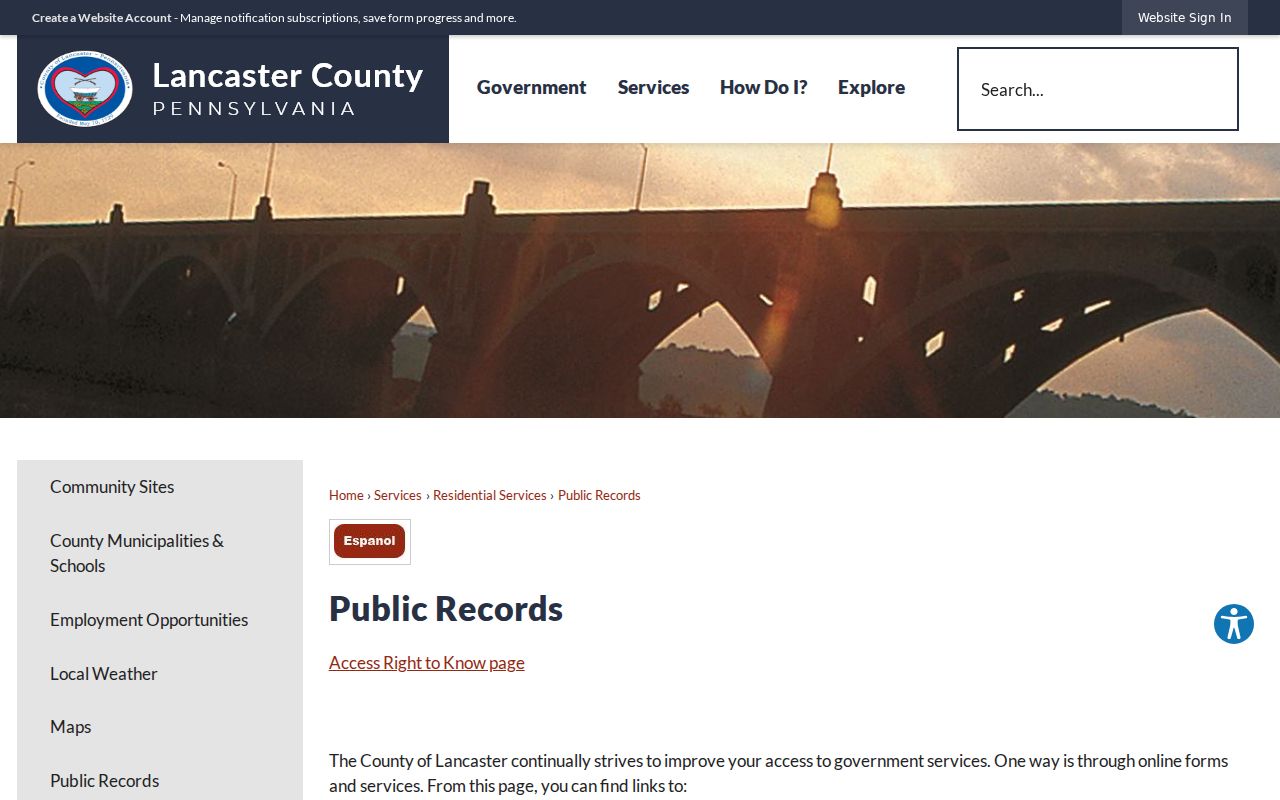
The hub helps with routing, but the linked court, prison, and agency systems remain the actual custodians.
Lancaster County Criminal Docket Fields
UJS separates court type from case category. For Lancaster criminal records, that split matters. Magisterial District records can hold the complaint, bail, preliminary hearing, and summary outcome. Common Pleas records take over after misdemeanor or felony charges are held for court. A docket number is the sharpest key, but a participant search can work when the number is unknown.
| Field | Use | Lancaster search note |
|---|---|---|
| Court Type | Select the record level | Run MDJ and Common Pleas searches |
| Case Category | Limit record kind | Choose criminal or the relevant MDJ category |
| County | Limit geography | Select Lancaster |
| Participant Name | Find cases by person | Start with first and last name |
| Date Filed | Narrow a broad result set | Use only when the likely period is known |
| Docket Number | Open a known case | Enter the court-specific format |
The county homepage also offers department paths and public services. The official Lancaster County site is the source for current office routing.
Use the department directory when a portal result points to a specific Lancaster office or when posted contacts change.
Official Pennsylvania Background Checks
The Pennsylvania State Police Bureau of Records and Identification keeps the Central Repository. Its public product is Pennsylvania Access To Criminal History, or PATCH. A standard Pennsylvania-only name check costs $22. A notarized certificate adds $5. The volunteer channel is free, while a subject who wants their own complete PSP record uses the $20 mail-only Access and Review request. The public PATCH response can omit non-conviction material that appears in subject review.
Fingerprint checks serve a different purpose. IdentoGO by IDEMIA captures prints for clearances required by specific Pennsylvania laws. Preregistration is mandatory, and the correct service code controls both the purpose and fee. The FBI Identity History Summary is subject-only and national in scope. It is not the same as PATCH.
| Official product | Scope | Method | Fee |
|---|---|---|---|
| PATCH standard | Pennsylvania public dissemination | Online or mail | $22 |
| PATCH notarized | Standard result with notarization | Selected request | $27 total |
| PATCH volunteer | Statutory volunteer channel | Online or mail | Free |
| PSP Access and Review | Subject's full Pennsylvania record | $20 | |
| IdentoGO clearance | Service-code state or federal check | Preregister, then fingerprints | Varies |
The PSP overview of criminal history check options explains which official request fits the need.
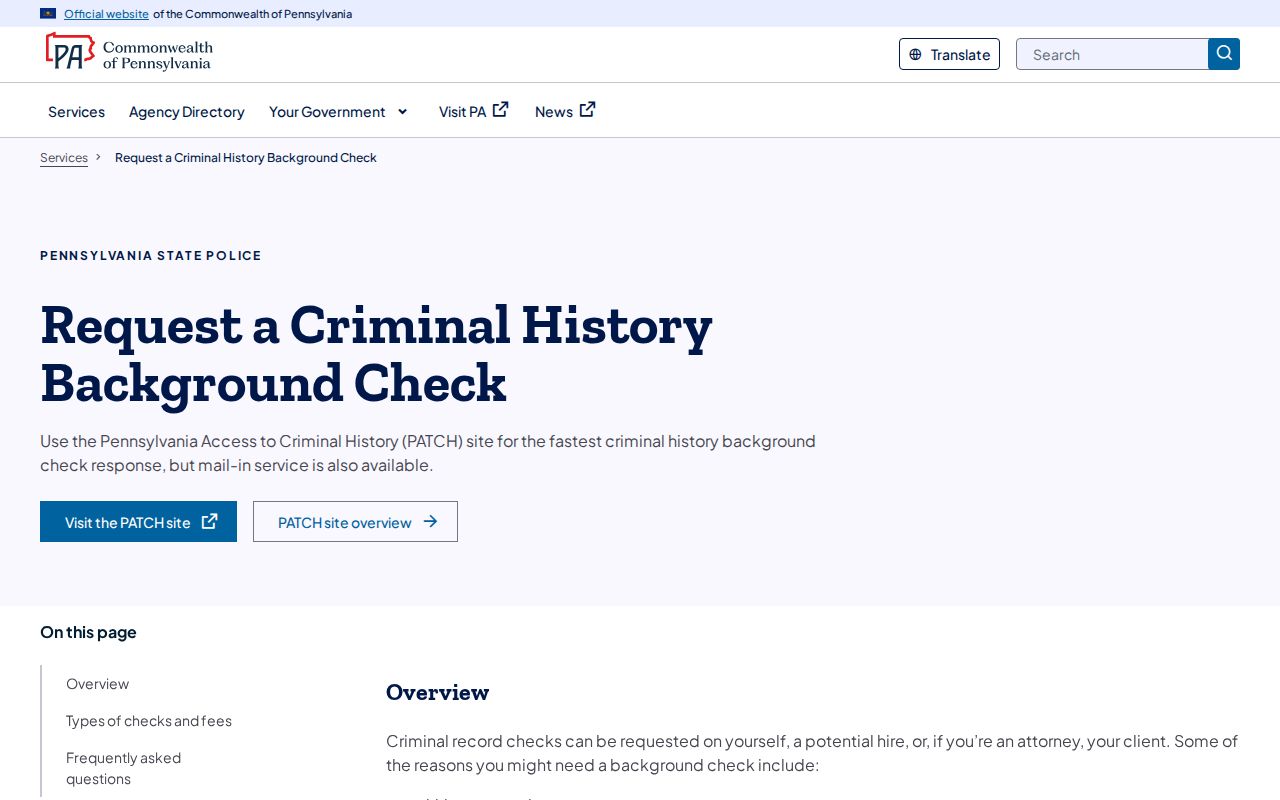
Always choose the product by scope. A county docket, public certificate, subject review, and fingerprint clearance answer different questions.
Lancaster County PATCH Criminal Results
PATCH asks a nonregistered requester for contact details, subject identifiers, and card information. A session may hold up to ten checks, and each request returns a control number. Save that number. A response marked “No Record” is often ready at once, but it speaks only to the record PSP may release through that product. It does not search federal records, other states, every police narrative, or a county-only booking file.
“Request Under Review” is not a finding that a person has a criminal record. It means the submitted identifiers may match repository data and staff must review the request. PSP says this can take up to two weeks. A person returning for status needs the control number, the subject name exactly as submitted, and the submission date.
The live PATCH portal is the official entry point for a Pennsylvania name check.
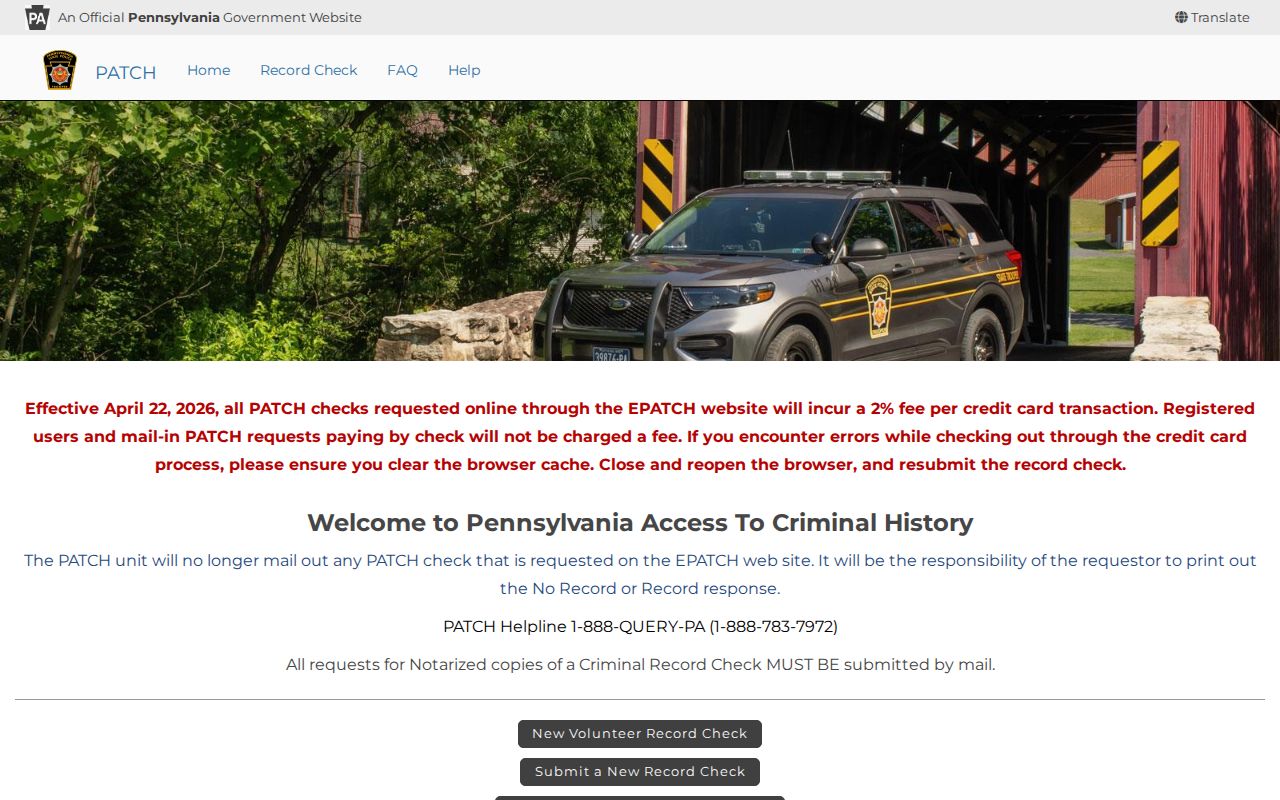
The portal's status tools make the saved control number essential when manual review is required.
PSP also publishes a PATCH results and process overview.
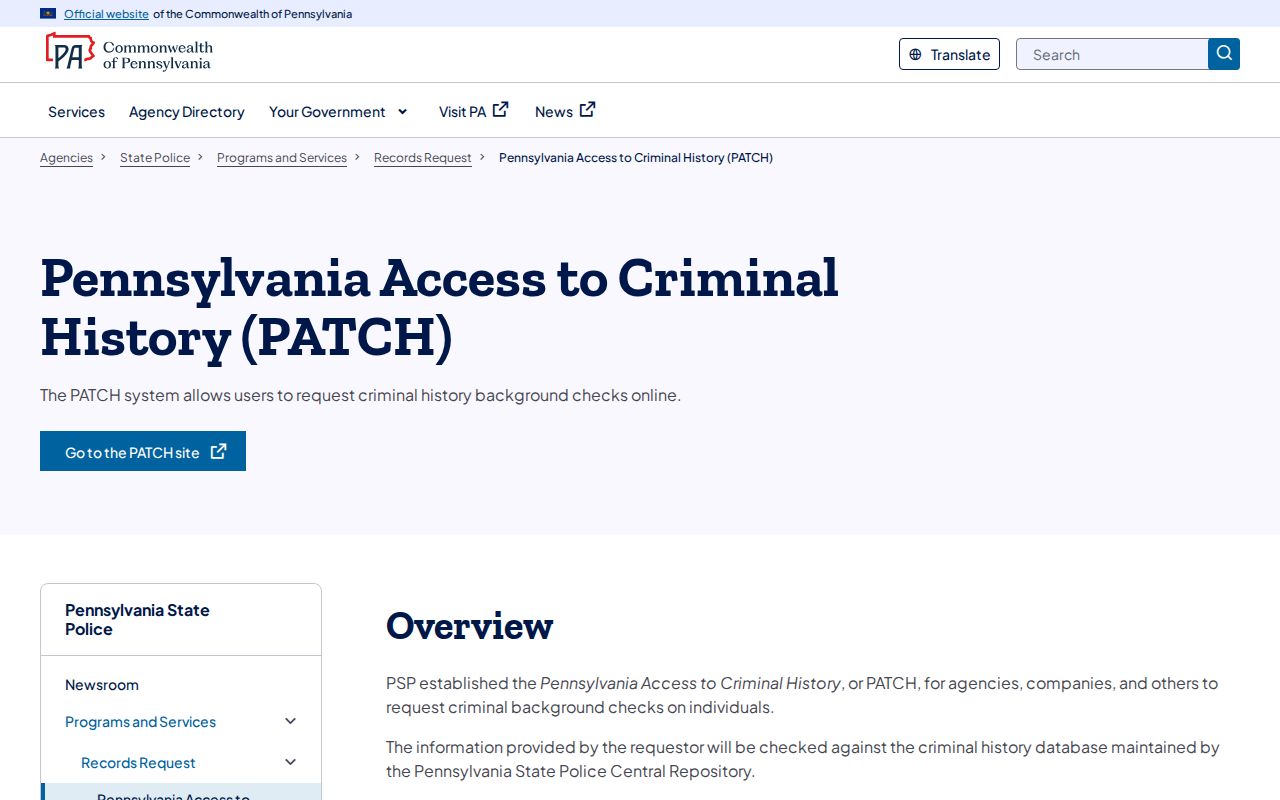
That explanation is the right source for result states, processing time, certification, and the difference between registered and nonregistered users.
Types of Criminal Records
A Lancaster County criminal record is not one file. The arresting agency writes the incident and arrest report. Lancaster County Prison creates a booking and custody entry after commitment. A Magisterial District Judge records the first court events. Clerk of Courts keeps the Common Pleas prosecution file. PSP compiles reportable events and later dispositions in the Central Repository.
The office matters as much as the name being searched:
- Police reports contain the agency narrative, officers, date, place, and initial offenses, with lawful redactions.
- Booking records show intake and present custody facts, not the final outcome.
- Court dockets track allegations, bail, hearings, pleas, outcomes, and sentences.
- PATCH records compile Pennsylvania repository information under dissemination law.
- Warrant and supervision entries require direct court, sheriff, probation, or state-custody context.
Registry listings form another public-protection record. The Pennsylvania State Police Megan's Law Public Website publishes authorized profile data, while juvenile, sealed, and limited-access records normally stay out of public results.
Lancaster County Criminal Custody Systems
Lancaster County Prison holds people awaiting court and people serving county sentences. Its current-inmate result is a custody snapshot, not a past-arrest archive. A missing name can reflect release, transfer, a spelling change, state commitment, or federal custody. Past booking material requires a focused prison or arresting-agency request, followed by UJS for the prosecution outcome.
The PA DOC Inmate/Parolee Locator covers state custody and parole. It excludes county facilities and updates daily. The Federal Bureau of Prisons locator is a third, separate channel. Moving from one system to the next is more sound than treating a blank county result as proof that no record exists.
| System | Best use | Main limit |
|---|---|---|
| Lancaster County Prison | Current county detention | Not a historical arrest search |
| PA DOC Locator | State inmate or parole status | County inmates are absent |
| UJS docket | Case progress and disposition | Not a live custody roster |
| PATCH | Pennsylvania repository response | Not a jail or federal search |
Note: A charge on a jail profile remains an allegation unless the court's charge-level disposition shows a conviction.
What a Lancaster County Criminal Record Shows
A public UJS docket identifies the court, county, docket number, filing date, status, judge, participant role, counsel, and prosecuting office. Charge rows add the statute, description, grade, and outcome. Other parts can show the originating MDJ number, arresting agency, complaint date, bail status, hearings, motions, plea or trial, sentence, and a public financial summary.
| Name & Identifiers | Public name and role, with protected identifiers withheld or redacted. |
|---|---|
| Arrest / Booking Data | Complaint or arrest date, originating agency, and separate prison intake facts when applicable. |
| Charges & Statutes | Count sequence, Pennsylvania citation, offense text, grade, and charge-level disposition. |
| Disposition | Guilty plea or verdict, acquittal, dismissal, nolle prosequi, amendment, or other recorded result. |
| Sentence | Confinement, probation, restitution, fines, costs, and other public terms. |
| Custody / Supervision | Public docket or locator status, not private officer notes, assessments, or jail classifications. |
Read each count. A closed case can include a guilty plea on one charge, dismissal on another, and nolle prosequi on a third. Likewise, an active label may reflect collections or supervision after guilt has already been decided.
Lancaster County Criminal Records Downtown
Several key offices sit in a compact Lancaster corridor, but each holds a different record. Clerk of Courts is on the second floor of the Lancaster County Courthouse, 50 North Duke Street. Its public counter runs from 8:30 a.m. to 5 p.m. on weekdays, while filing ends at 4:30 p.m. The clerk handles Common Pleas criminal filings, warrants, background searches, commitments, appeals, and expungements. The Prothonotary in the same building handles civil work, a useful distinction before choosing a counter.
Lancaster County Prison is at 625 East King Street and can be reached at 717-299-7800. Adult Probation and Parole Services is at 40 East King Street, 717-299-8181. Lancaster City Police Records sits on the third floor at 39 West Chestnut Street, 717-735-6670. The County Government Center's open-records office is at 150 North Queen Street, Suite 715. Physical closeness does not merge their files.
Clerk of Courts
50 N. Duke St., second floor
717-299-8275
Case files, dispositions, copies, expungement filings
County Prison
625 E. King St.
717-299-7800
Current custody and booking records
Adult Probation
40 E. King St.
717-299-8181
County sentence supervision
City Police Records
39 W. Chestnut St., third floor
717-735-6670
LCBP reports and local products
Public Access Laws
Pennsylvania access rules depend on the custodian. The Right-to-Know Law applies to qualifying agency records, subject to exemptions. Ordinary criminal docket sheets and case files follow the Unified Judicial System Public Access Policy instead. Pennsylvania's Criminal History Record Information Act controls PSP dissemination, expungement, and limited access. A request cannot override an investigative exemption, sealing order, or protection for a juvenile, victim, or confidential identifier.
Key Pennsylvania rules:
Right-to-Know Law, 65 P.S. §§ 67.101-67.3104 presumes qualifying agency records are open but does not replace judicial case-record rules.
18 Pa.C.S. § 9121 governs dissemination and restricts public release of limited-access charges.
18 Pa.C.S. §§ 9122-9122.2 set the rules for expungement and Clean Slate limited access.
42 Pa.C.S. Chapter 97 authorizes applicable public registry information and PSP administration.
The official Pennsylvania Right-to-Know Law overview explains the general public-record framework.
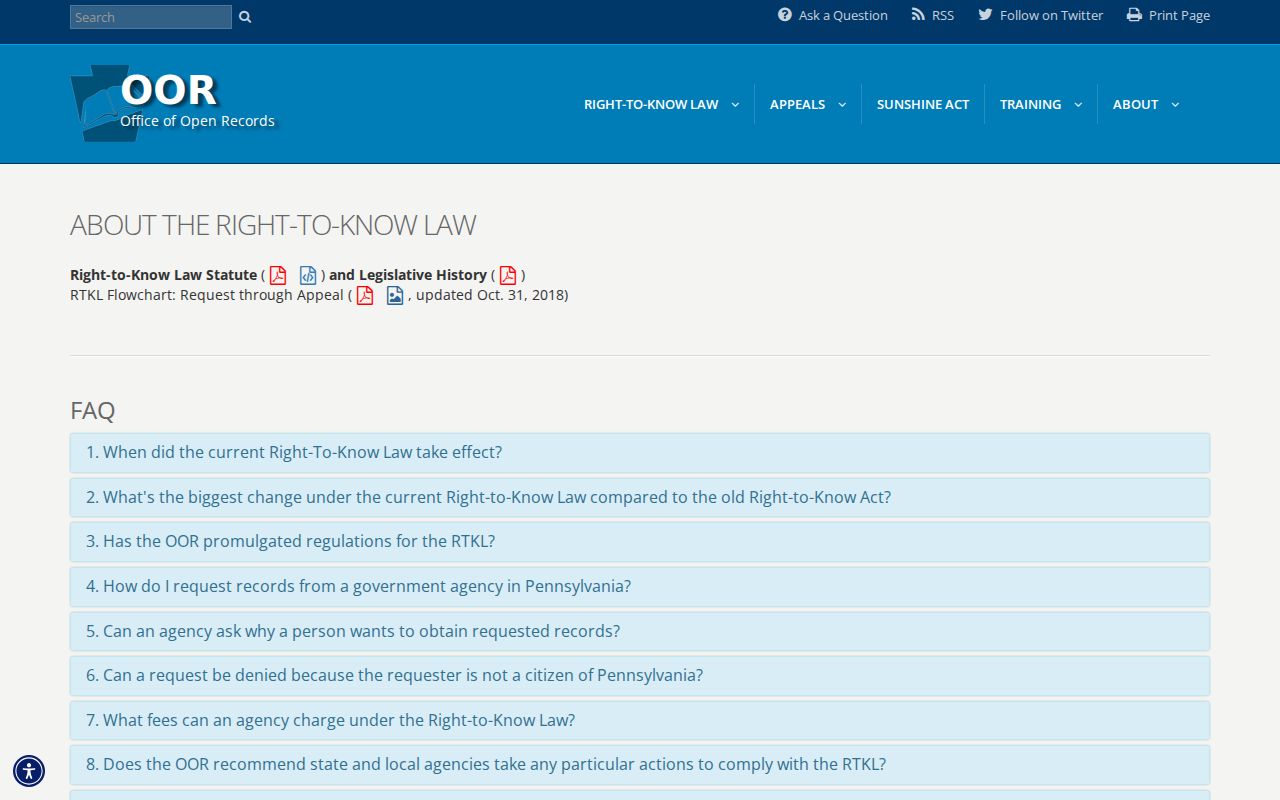
The key practical rule is to start with the office that keeps the requested record, then use RTKL only where that law actually governs the material.
Three Lancaster County Criminal Record Custodians
Downtown Lancaster has three public-record routes that are easy to confuse. The county Open Records Officer handles county administrative requests at 150 North Queen Street, Suite 715, and accepts email at openrecords@lancastercountypa.gov. The City of Lancaster has its own officer and portal for municipal records. Judicial financial records go to the court's Rule 509 officer at the courthouse or lancastercourtrule509@lancastercountypa.gov.
None is the normal first stop for a criminal docket copy. Use UJS and Clerk of Courts for case records. Ask the police agency that created an incident report. Seek booking or current-custody facts from the prison. A useful formal request names the agency, type of record, incident or case number, date range, subject or location, preferred format, and whether inspection or copies are sought.
County RTKL requests generally receive an initial response within five business days, though an agency may invoke a statutory extension. A Rule 509 denial has a different local appeal track: the requestor may appeal within 15 business days, and the President Judge or designee has 20 business days to decide.
Sealed, Expunged & Restricted
UJS excludes juvenile, sealed, expunged, pending-expungement, destroyed, and limited-access cases from public docket results. A no-result search can therefore be accurate without proving that no event ever occurred. Confidential identifiers may be redacted from an otherwise public record rather than closing the whole file.
Expungement under 18 Pa.C.S. § 9122 applies only in defined circumstances, including certain non-convictions, qualifying summary cases, age-based conditions, death, and pardoned matters. Petition-based limited access can cover qualifying offenses after the set conviction-free period, completed restitution, and other requirements. Automatic Clean Slate limited access covers qualifying non-convictions, summaries, and eligible convictions after statutory waits. Act 36 expanded parts of that process, including some pardon-based automatic expungement.
File qualifying Lancaster County petitions through Clerk of Courts, using the current form and docket number. The research did not establish a current filing fee, so ask 717-299-8275 before filing. After an order, compare the public UJS result with a fresh PSP Access and Review response. Limited access blocks broad public dissemination but does not erase criminal-justice access in the same way as expungement.
Lancaster County Criminal Treatment Courts
Lancaster County operates Drug, Mental Health, and Veterans Courts. These named programs can change the way an eligible case moves through court and supervision, but participation is not a promise that the public record will vanish. The county treatment-court application states that all three programs have four phases of at least 90 days, followed by one to three years of aftercare. It also warns that completion does not automatically expunge the charges.
Veterans Court may consider qualifying current or former service members, including Reserve and National Guard members, after Common Pleas referral. Homicide and registerable sex offenses are excluded. Requirements can include a mentor, treatment, weekly court appearances, probation, and random testing. The docket remains the source for what happened in the individual case, while expungement or limited access requires a separate legal basis and process.
Note: A diversion or treatment outcome should be read from the charge-level docket and any later access order, not inferred from program participation alone.
Criminal Records by City in Lancaster County
Lancaster County has one incorporated city and many boroughs and townships. The research ranks Lancaster city, Ephrata borough, and Elizabethtown borough as the three largest incorporated municipalities for locality pages. Their police departments keep their own incident records. Pennsylvania does not use city municipal criminal courts here, so local prosecutions appear first in the assigned Magisterial District Court and then, if held for court, in Common Pleas.
Lancaster Criminal History
County seat with a fully documented city police Records Unit and separate city open-record route.
Ephrata Criminal History
Borough police reports begin with Ephrata Police, while dockets and custody move to county systems.
Elizabethtown Criminal History
Identify borough, campus, or state police first, then follow the case through UJS.
Official Census context is available through Lancaster County QuickFacts.
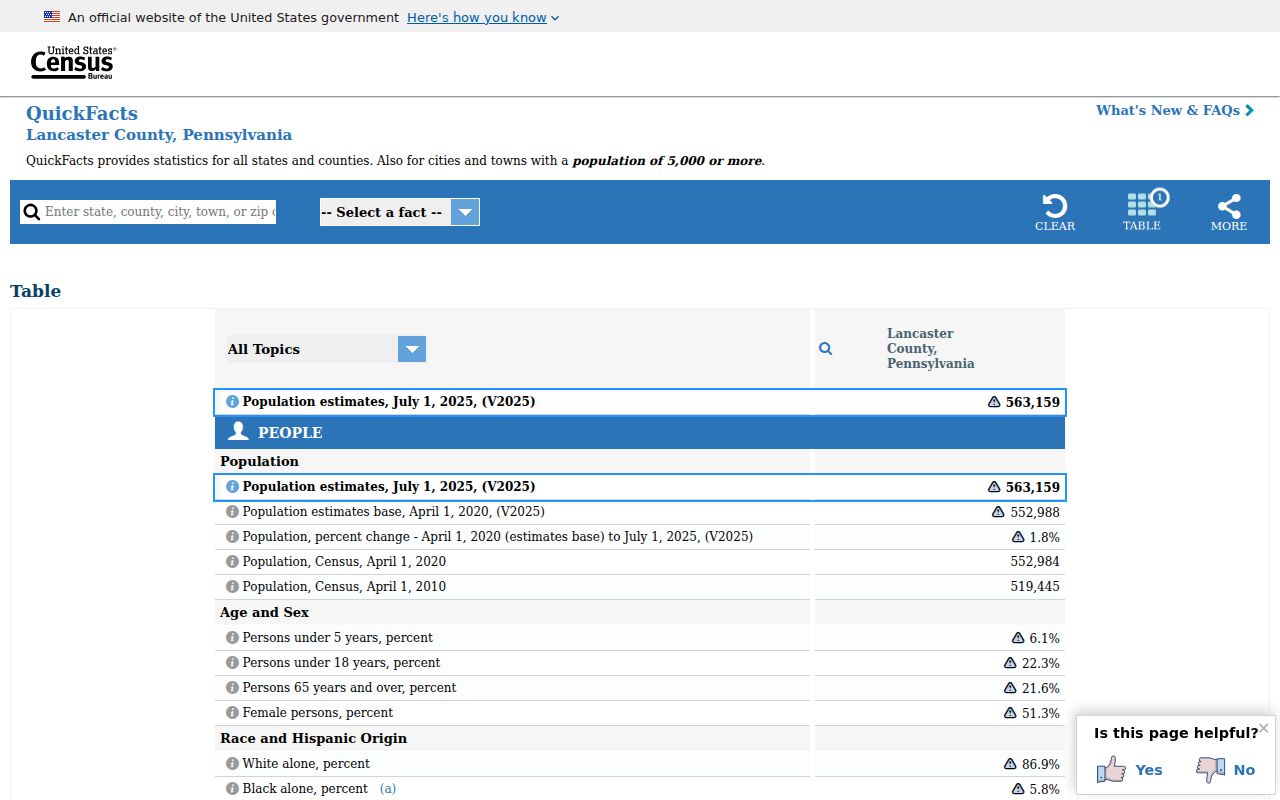
Population context helps explain the county's fragmented police landscape, but it does not justify treating county totals as the record of one municipality.
Lancaster County Criminal Supervision
Lancaster County's adult probation office dates to a court order in 1933. Adult and juvenile work separated in 1977, four adult programs were unified in 2000, and a two-office structure followed in 2012. Today Adult Probation and Parole Services reports to District Court Administration. Its general units include central intake, low-risk, medium and high-risk, and pre-parole work. Special units cover ARD, assessments, domestic violence, electronic monitoring, mental health, transfers, and treatment courts.
There is no public Lancaster County probation name search. UJS can show the sentence, while PA DOC's locator covers state parole. County officer notes, risk assessments, and detailed conditions are not ordinary public records just because a docket is open. A technical violation or new case may lead to a detainer, warrant, or revocation hearing, but each entry needs its procedural context.
For fingerprint-based clearances, the IdentoGO Pennsylvania location search gives the current authorized sites after preregistration.
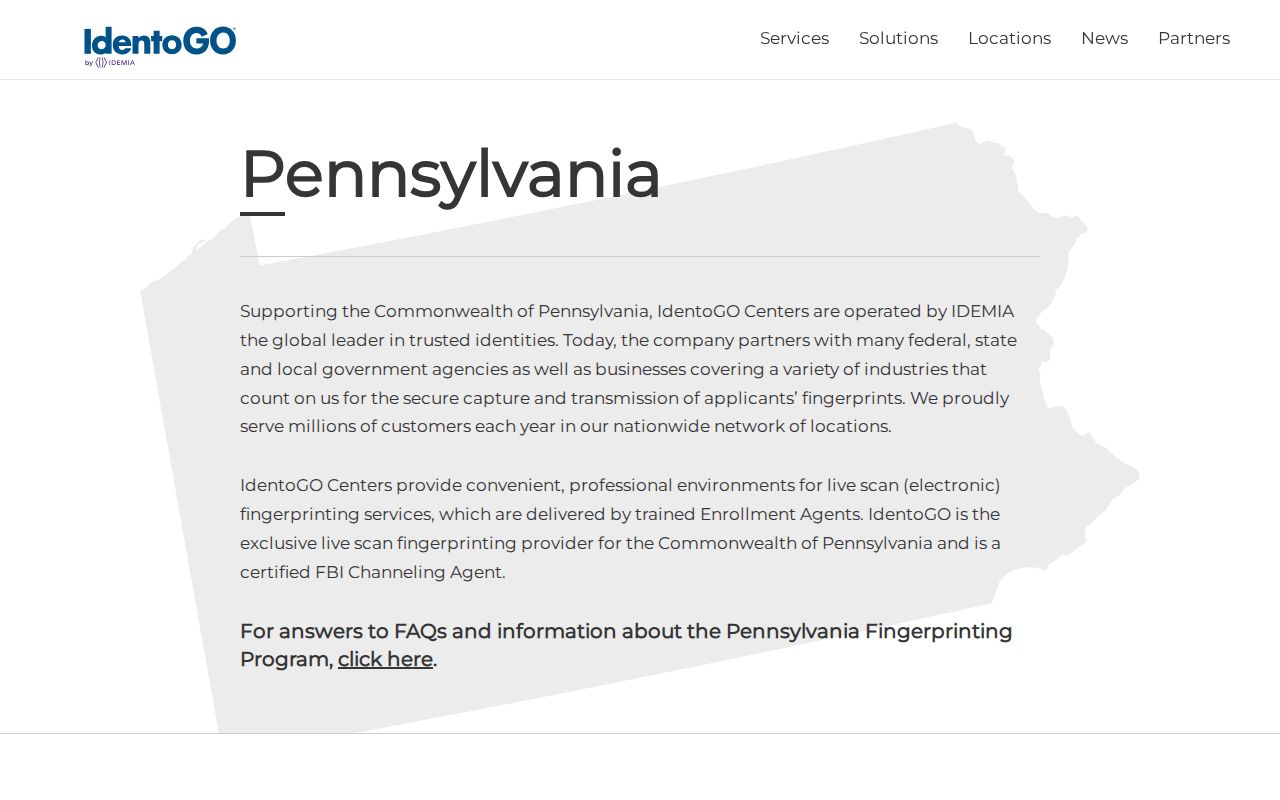
The locator should be checked near the appointment date because available sites, hours, and service-code fees can change.