
Criminal Cases in the Lancaster County Courts
Lancaster County criminal court cases can begin before a Magisterial District Judge, or MDJ. That court handles the criminal complaint, preliminary arraignment, bail, and preliminary hearing for a felony or misdemeanor. It also decides many summary, traffic, and nontraffic matters. When an MDJ holds misdemeanor or felony charges for court, the case moves to the Lancaster County Court of Common Pleas Criminal Division. That court handles the District Attorney's information, formal arraignment, motions, plea or trial, disposition, sentence, and later supervision issues.
The Clerk of Courts is the chief custodian for Common Pleas criminal files. The office also handles bail records, petitions, summary appeals, warrants, appellate filings, costs, and expungements. An MDJ file stays with its district court even though a public docket sheet may appear in the same statewide search. The Prothonotary, located in the courthouse as well, is the civil filing office. It is not the right counter for a Lancaster County criminal case file.
Lancaster County UJS Case Fields
The Unified Judicial System Public Web Docket Sheets search is the free statewide starting point. Select either Magisterial District Court or Court of Common Pleas, then choose Lancaster County. A broad participant search works best with first name, last name, and county. Exact docket numbers are more precise. Filing dates, status, case category, and date of birth can narrow a large result set, but too many fields can hide a correct match.
| Field | Type | Use | Lancaster search note |
|---|---|---|---|
| Court Type | Dropdown | Required | Search MDJ and Common Pleas separately |
| Case Category | Dropdown | Contextual | Choose the criminal category for that court |
| County | Dropdown | Recommended | Select Lancaster |
| Participant Name | Text | Name search | Begin with first and last name |
| Date of Birth | Date | Optional | Helps separate people with the same name |
| Docket Number | Text | Exact search | Use the court-specific number format |
| Filed From/To | Date | Optional | Narrows the filing period |
The official UJS case information overview shows how public and secure products differ.
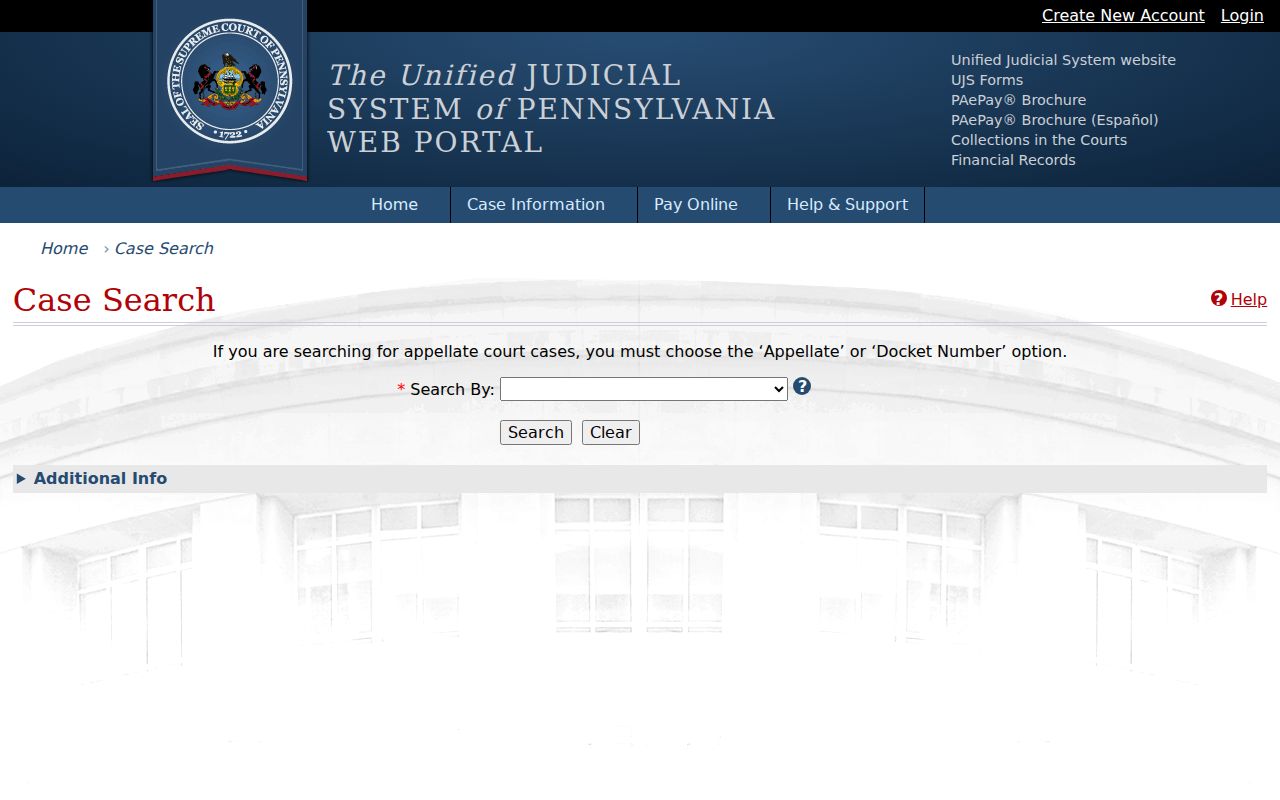
The public interface helps locate a docket, but it does not grant access to secure reports or every filed document. The official UJS docket-search instructions explain the public fields and exclusions.
How to Search Case Records
Use both court levels before deciding that a Lancaster County case is missing. The first docket may show bail and the preliminary hearing, while the later docket gives the filed charges and final outcome. The originating MDJ number on the Common Pleas sheet is the bridge between them. Public docket PDFs are free to view and print.
- Open UJS Public Web Docket Sheets and choose the proper court type.
- Search the participant's first and last name with Lancaster County, using few filters at first.
- Repeat the search for the other court level and confirm nonconfidential identifiers before matching a person.
- Open the PDF and record both the Common Pleas docket number and originating MDJ number.
- Call the Lancaster Clerk of Courts at 717-299-8275 for an unattached filing, older file, copy, or certified record.
For the broader official explanation of public docket access, the UJS case information page is a useful companion to the live search.
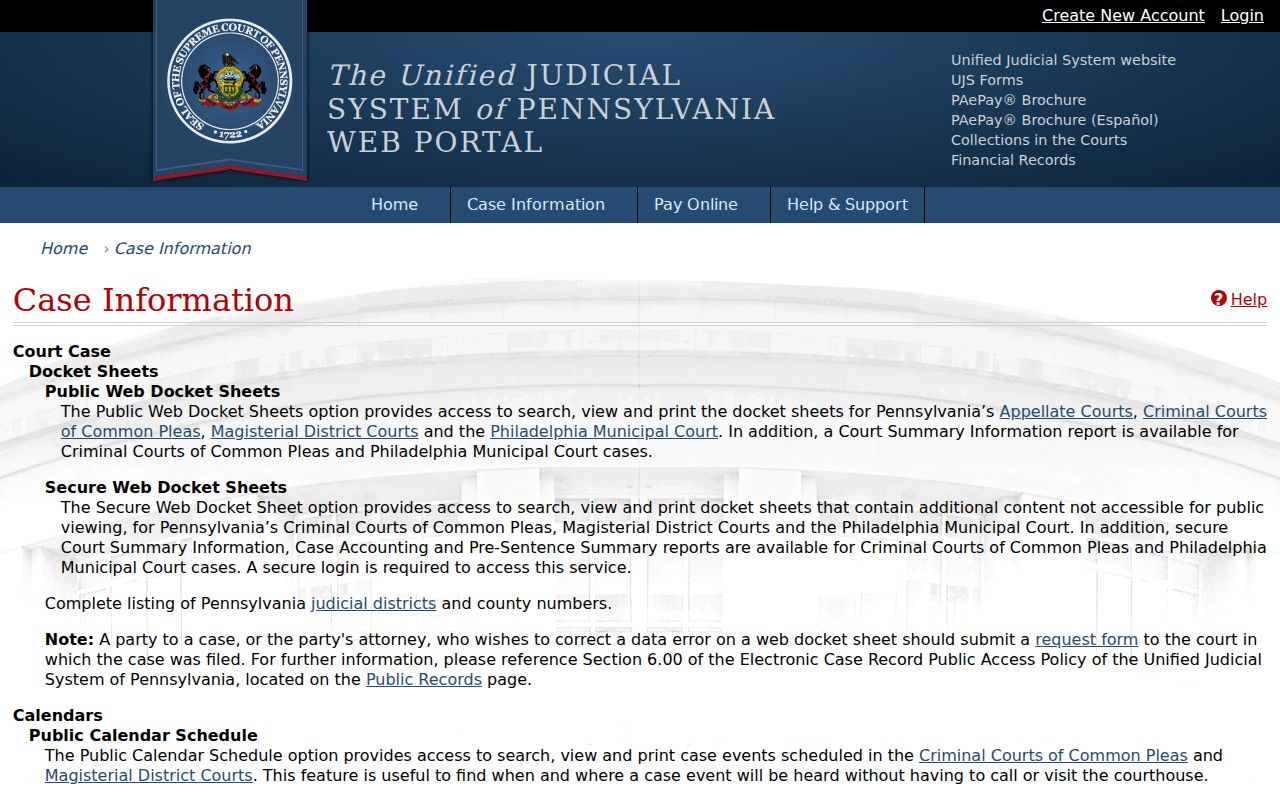
That distinction matters when a docket is visible but its motion, order, or exhibit is not available as an online image.
Lancaster County Criminal Clerk
The Lancaster County Clerk of Courts works on the courthouse second floor at 50 North Duke Street, Lancaster, PA 17602. The telephone is 717-299-8275. The public counter is open from 8:30 a.m. to 5 p.m. on weekdays, while filing service ends at 4:30 p.m. Ask the Clerk, not the Prothonotary, for a Common Pleas criminal file. Staff may need time to retrieve an older or archived court record.
Bring the docket number when possible. State whether inspection, a plain copy, or certification is needed, since costs and processing can differ. The indexed official source does not publish a current universal copy or certification fee, so request a quote. Security screening applies at the courthouse. Court Administration handles interpreter and accessibility arrangements.
The official Lancaster Clerk of Courts page identifies the correct criminal record counter and its links.
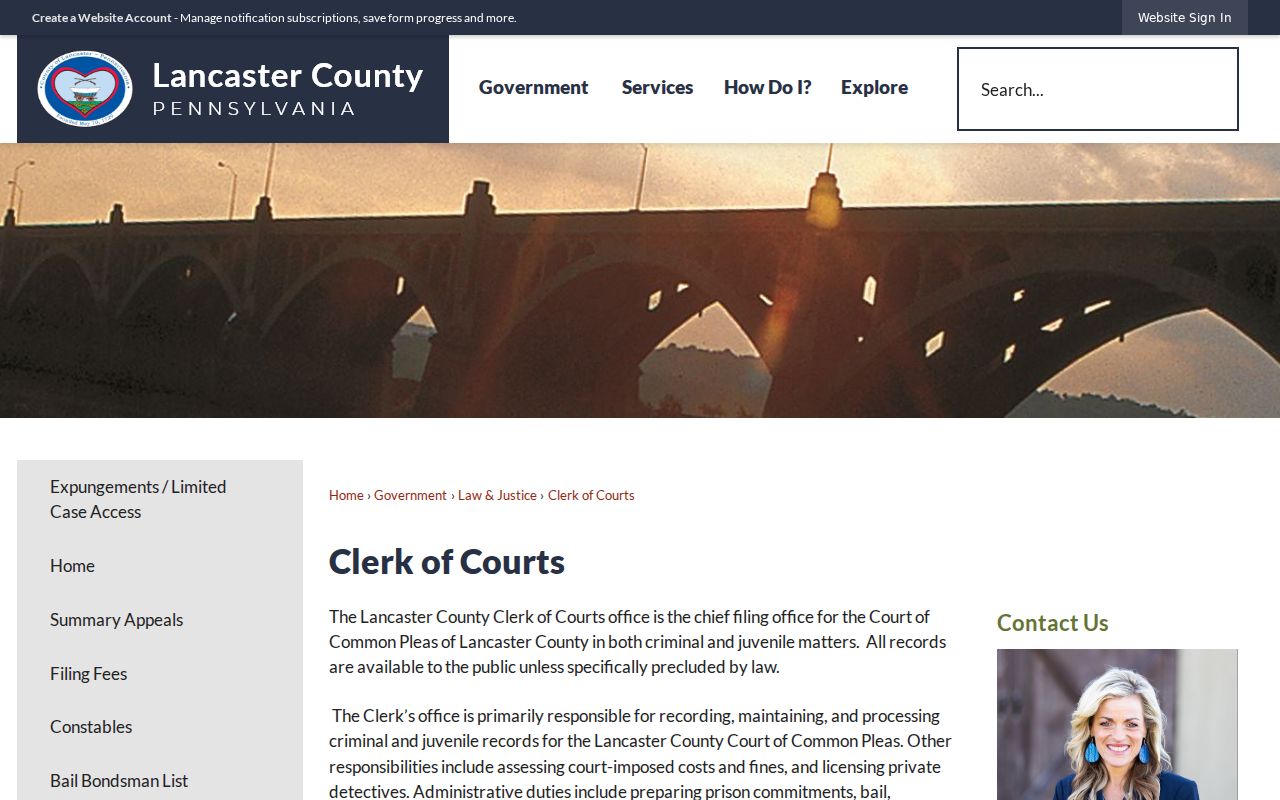
This local office is the fallback when the statewide PDF lists a filing but does not provide the filing itself.
What the Case File Shows
A Lancaster County docket is read charge by charge. The case-level label alone is not enough. One case can contain a guilty plea on one count, a dismissal on another, and a nolle prosequi on a third. A closed status means the proceeding ended, not that every count led to a conviction. An active status can reflect supervision or collection after sentence rather than a pending trial.
| Caption and docket | Court, county, case number, status, filing date, and judge |
|---|---|
| Participants | Party role, counsel, and prosecuting office |
| Origin | Complaint date, arresting agency, and originating MDJ docket |
| Charges | Sequence, statute, description, grade, and separate disposition |
| Proceedings | Arraignments, hearings, motions, conferences, plea, trial, and orders |
| Bail | Type, amount, and status, which may change during the case |
| Outcome | Disposition, sentence, confinement, probation, and post-sentence activity |
| Financial summary | Public fines, costs, restitution, and payments when shown |
A financial total may combine several types of obligations. It should not be described as the fine alone.
Lancaster County Criminal Case Outcomes
Pennsylvania court terms describe different results. They should not be collapsed into a single “cleared” or “convicted” label. Read the disposition beside each charge, then check the sentence section for any count that ended in guilt. The filed information may also differ from the first complaint because charges can be amended, withdrawn, dismissed, or replaced as the prosecution moves forward.
- Dismissal
- A charge ends without a conviction.
- Nolle prosequi
- The prosecutor formally chooses not to continue a charge.
- Acquittal
- A not-guilty result after adjudication or trial.
- Guilty plea
- The person admits guilt and the court proceeds to judgment and sentence.
- Nolo contendere
- A no-contest plea treated as a conviction without a factual admission of guilt.
For a full county-wide records view beyond the court file, the Lancaster County criminal history overview separates dockets from repository and custody products.
Stages of a Criminal Case
Most Lancaster County felony and misdemeanor cases pass through two court files. The police complaint reaches an MDJ for the first arraignment and bail. A preliminary hearing tests whether charges will be held for Common Pleas. The District Attorney then files the information. Formal arraignment, motions, conferences, plea or trial, and sentence follow on the Common Pleas docket. Appeals, post-sentence motions, costs, or supervision can add later entries.
Case flow: Charges Filed → Arraignment → Pretrial → Plea or Trial → Disposition → Sentencing
The public docket is the best time line. It should not be used to guess how long a stage will take because the research identifies no fixed Lancaster schedule for individual cases.
Missing Lancaster County Criminal Documents
A docket-sheet PDF is a generated summary, not a scan of every pleading, order, or exhibit. If an entry names a document but shows no attachment, contact the Lancaster Clerk. Ask whether the item is public, available in electronic form, archived, redacted, or subject to a copy charge. The absence of a download does not prove the document does not exist.
Routine criminal docket requests go to UJS or the Clerk. They do not begin as a county Right-to-Know request. The court's Rule 509 and open-records page covers judicial financial records and explains the separate review path.
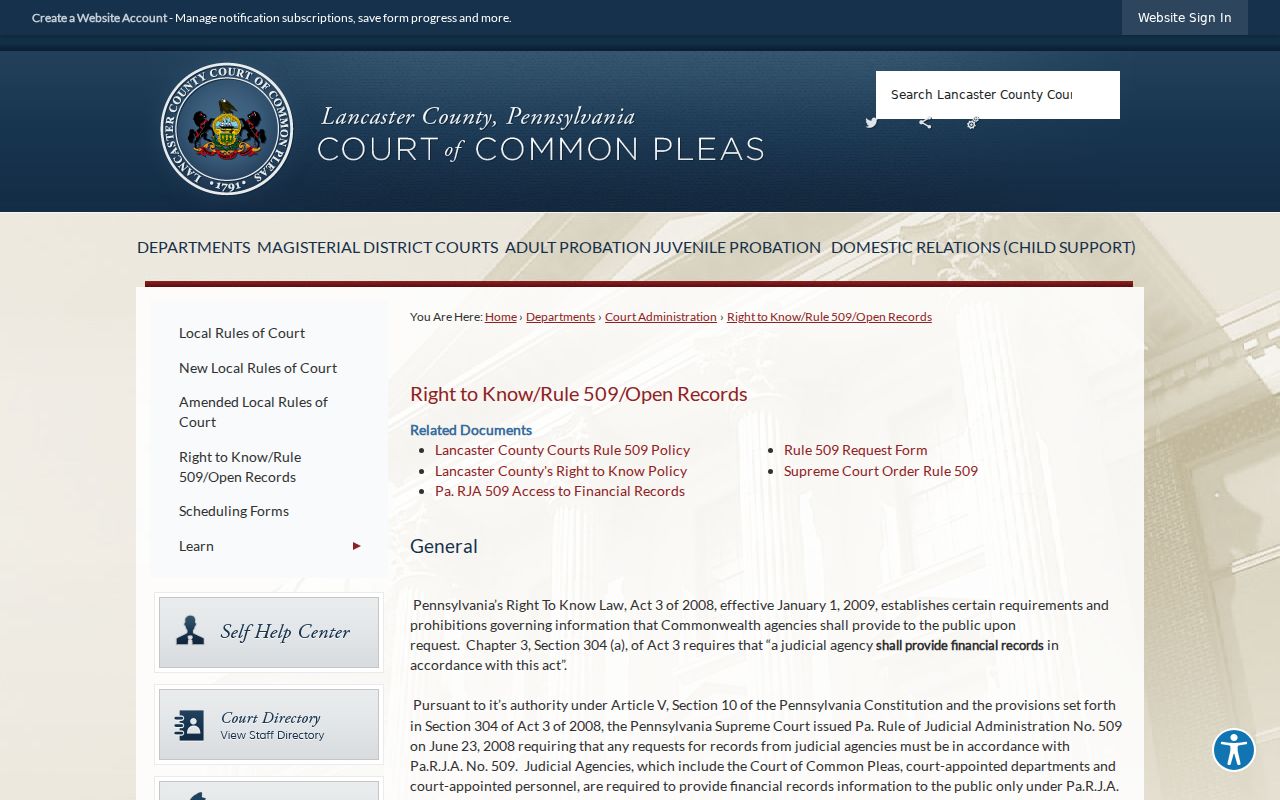
Keeping those channels separate avoids sending a case-file request to a custodian who does not hold the criminal docket.
Access & Restrictions
Public Lancaster County criminal court dockets are governed chiefly by the Unified Judicial System Public Access Policy. Juvenile, sealed, expunged, pending-expungement, limited-access, and destroyed records do not appear in ordinary public web docket results. Date of birth, Social Security numbers, account numbers, victim or minor data, and confidential filings are restricted or redacted. A no-result search therefore does not prove that no proceeding ever existed.
The Pennsylvania Right-to-Know Law applies to qualifying agency records, but it does not override court access rules, sealing orders, or criminal-history dissemination limits. Ask the Clerk whether a public, redacted portion can be inspected if a record is known but not visible online. A person checking their own record may also compare the official court disposition with PSP Access and Review when correcting a repository gap.
Lancaster County Criminal Specialty Courts
Lancaster County also uses Drug Court, Mental Health Court, and Veterans Court within its Common Pleas system. These programs create their own docket and supervision events, but they do not erase the underlying criminal case. Veterans Court may consider qualifying current or former service members, including Reserve and National Guard members, after referral. Homicide and registerable sex-offense charges are excluded from that named program.
Program duties can include treatment, mentors, weekly court sessions, probation, and random testing. Lancaster treatment courts use four phases of at least 90 days, with a minimum one-year program and later aftercare described in the local application. Completion does not automatically expunge charges. The actual docket, orders, and Clerk file remain the sources for the case outcome and any later access restriction.
A specialty-court entry still needs the same careful reading as any other Lancaster County criminal case. Admission, a phase change, a sanction, program completion, and the disposition of each charge are distinct events. The docket may show only a short event label, while an order or program document supplies the detail. When the online sheet does not answer whether a charge was dismissed or a sentence was imposed, the Lancaster Clerk file is the proper source. Program participation should never be described as a conviction, dismissal, or expungement unless the court record says so.